From Birth Rooms to Remote Mines: Four Leaders Driving Sustainable Health Change
In the Global Conversation on 11 February, 92 participants from 11 countries and 15 universities listened to alumni of the Midwives and MISH programmes share how evidence-based methods, cultural understanding, and community partnerships are reducing maternal deaths, strengthening access to healthcare, and inspiring scalable innovations across vulnerable settings.
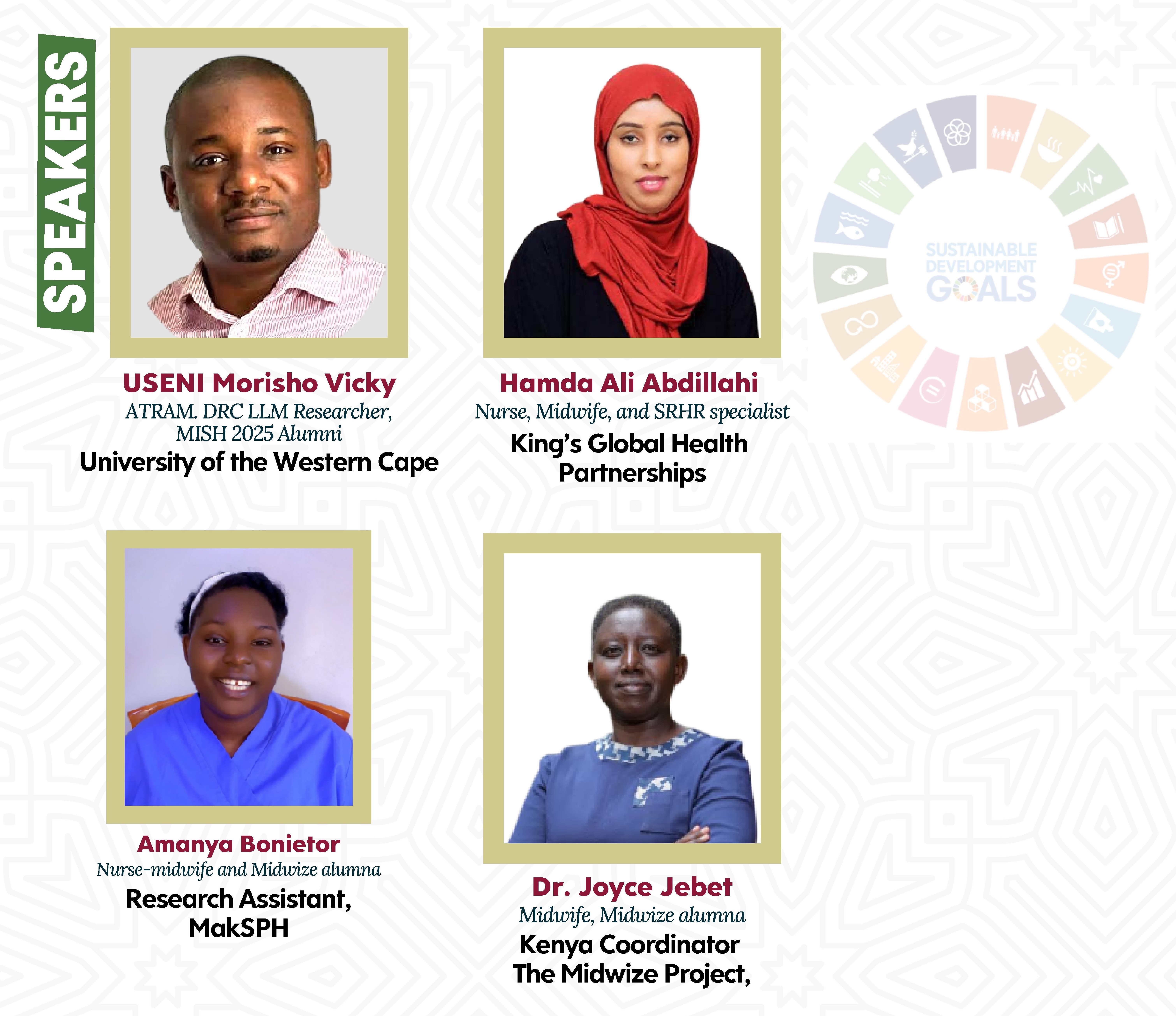
From Uganda, Senior Midwives Ambassador Amanya Bonietor shared how simple, evidence‑based practices—warm compresses, dynamic birth positions, intrapartum support, and immediate skin‑to‑skin contact—are improving birth experiences and reducing complications. Through workshops, social media advocacy, and a postpartum mothers’ support network, these practices are now spreading far beyond their original pilot sites.
From the DRC and regional settings, researcher and MISH alumni Useni Morisho Vicky presented the Advantage Plus Project, a community-based intervention designed to bring health services directly into remote mining areas. This is an intervention at pilot stage and designed to bring health services directly into remote mining areas. Using strategic tools gained from the MISH programme, his team is partnering with Médecins Sans Frontières, among others, to address the health effects of dust exposure, infectious diseases, mercury contamination, and unsafe working conditions.
From Kenya, Country Coordinator Dr. Joyce Jebet shared how midwives across Nairobi and Mombasa have transformed maternal care through practical, scalable changes. Increased use of skin‑to‑skin care, birth companions, and dynamic birth positions has led to higher facility attendance, improved birth experiences, reduced perineal tears, and—remarkably—zero maternal or neonatal deaths during the intervention period.
From Somaliland, nurse midwife and country coordinator Hamda Ali Abdillahi highlighted how cultural norms around surgical consent can delay lifesaving care. Her research exposed systemic barriers, leading to the introduction of the WHO Safe Childbirth Checklist in Somaliland’s main referral hospital. The initiative is strengthening emergency readiness, improving communication, and contributing to national policy development.
Across all presentations, a clear message emerged: locally led innovation—rooted in context, culture, and community—drives sustainable health improvement.